
Reverse Cholesterol Transport
Through Diet, Movement and Fasting
Dr. Kevin Ham, MD
Endothelium is the Life of Blood
“The highway of life is from the heart into the blood into the liver.”
Kevin Ham, MD
I’m attending the last TED conference in Vancouver this week, and it is so inspirational. I wanted to meet Reed Hastings, the Founder of Netflix. Made my day when I saw him. I was standing to his right as a lady spoke to him on his left. He turned to me and smiled, stuck out his hand, and kindly embraced my right hand. He said, “Hi Kevin,” with a sweet smile and tender voice. He is such a kind gentleman, and I will never forget his attention, his smile and humility. He felt like a kindred spirit. No wonder Netflix has flourished under his guidance.
Then I was blown away by Mark Rober, a YouTube superstar with 75 million subscribers. He had a dream of making a $60 million educational program to provide to teachers for free. As he showed how he taught science to kids through experiments, making things fun, and hiding lessons in play, I wondered how I could do this for health education?
And Ann Patchett, who inspires everyone to be a reader of books. Wow, her TED talk melted my heart. In that moment, all the plaques of my coronaries were laid low like valleys in humble adoration to her heart for all people to read.
And of Amy Cuddy. I had a class with her while at Harvard Business School 18 years ago. I knew of her rise as one of the most-viewed TED Talks, thanks to her power pose. But I did not know how much professional bullying she had experienced due to it. I was in tears for most of her talk. I was so glad to give her a warm, empathetic embrace. I pray and wish to help her. I know she will rise again, like a caterpillar emerging from a cocoon.
I can go on about the endless emotions and wonder as I listened to Susan Burton provide homes for women who leave the prisons with no place to call home. Or Gabriella Dieguez, who has resurrected the lost voice of buried women composers. Or Gabriela Moynihan, who donated her left kidney at age 21. Or Azusa Murakami, who spends a year producing bubbles to show the beauty of life through the ethereal and temporal nature of our being and moments of life. I dream of organizing a conference like this, just for health, by wisdom that heals the body, soul, and spirit. It is a quiet seed planted in the vessels of my heart in the mountains of plaque, that faith shall remove and place them into the sea of blood that is impeded by the voluminous heights that oppose life, my own doing of decades of not living right, not eating right, as body, soul and spirit urge. I have heeded the warning signs and will live each moment in gratefulness and humble myself under the hand of God and people to do that which is planted in my heart.
May you be blessed by the hearts of others who yearn to make you and themselves whole and united, in peace and harmony, though the outer being be afflicted and the inner being assaulted.
I wish I could just start and be of heart and inspire and teach as they have at TED in my YouTube videos (youtube.com/@drkevinham) and in this newsletter, but I currently lack the full wisdom and creativity, not to mention the time. I have had so many people send their thanks and encouragement to keep providing valuable information as I learn and live it. To strive for excellence, yet have compassion and empathy as we journey together on our heart journey to heal together as best we can.
I will continue to pour my heart into figuring things out for myself and accomplish the proverb, “Physician, heal thyself!” so I can do so for you and everyone who suffers from these chronic, deadly diseases.
As you know, I reversed my carotid arterial plaque in just three months. I thought surely someone else in the world has done this, but I have yet to find any RCT or case study, for that matter. I’m continually searching for a better, faster way to heal arteries (coronaries, carotids (done), aortic, cerebral, femoral (easy), mesenteric (easy), retinal (I think it’s done, but will have to see when I get my next eye shot, last one three years ago, but supposed to be monthly)).
But my coronary arteries have not reversed… Yet. The obstruction volume was essentially the same, but I could see the plaque remodelling in shape, and my FFR (think of it like blood flow) past my most severe obstruction has improved from 75% to 80%, which is significant.
But why had my carotid plaque reversed and not my coronary heart arteries?
That question sent me down a deep scientific rabbit hole in my spare moments over the last 7 months. I prayed and asked for wisdom. Then, I found the ancient pathway that was actually discovered over 50 years ago, a 9-step biological pathway that I had never heard of before, yet once I found it, I started to understand it was already well known, yet only by special interest groups. Why wasn’t this mainstream when heart disease is the #1 global killer?
Reverse Cholesterol Transport, RCT. The same acronym we use for randomized controlled trials.
As I was listening to Peter Steinberger at TED, the creator of Open Claw, and how he had created it by thinking “a big Holy S**t” idea. As Peter described his Open Claw moment, one also came to me just minutes later. He said he hadn’t coded a single line, but had just prompted the AI to create the first versions of Open Claw when it became a team of autonomous, self-coding AI agents. He made it open source and clawed its way into everything to solve problems.
I thought, what could be a bigger problem than our world’s biggest disease killers, causing death and suffering to so many tens of millions each year? Mimi and Dave, whom we had just met at TED, have to leave tomorrow to be with her ailing 96-year-old father. God bless you, Mimi, and your dad.
I had a vision of how to help cure our top diseases. I saw a vision of the TED stage, and in its place was a different set of talks, talks by both healers and patients of wisdom that truly heal. The body, the mind and the spirit.
RCT
“Life is taught to be driven forward, but if you wish to live fully and openly, your direction should be in reverse.”
Kevin Ham, MD
The man who first described the process of Reverse Cholesterol Transport (RCT) was John Glomset, a Norwegian-American biochemist at the University of Washington. In 1968, Glomset published the hypothesis that HDL particles were not passive markers of cardiovascular health but active cholesterol collectors, gathering cholesterol from peripheral tissues, including arterial walls and returning it to the liver for permanent disposal.
He named it Reverse Cholesterol Transport (RCT) because it runs in the direction opposite to the process that causes arterial disease. Cholesterol enters arterial walls through LDL. Glomset said it also has to come out through a specific pathway, or plaque accumulates regardless of how well you manage the inflow. He already surmised the cure for heart disease with this insight.
His colleagues largely ignored him. Glomset’s hypothesis sat dormant for nearly two decades before Alan Tall at Columbia and Daniel Rader at Penn built the modern molecular framework on his foundation. Glomset was right in 1968.
Medicine took fifty years to act on it.
Almost everyone is focused on the first step: slowing or halting arterial disease by lowering LDL cholesterol. Hardly anyone focuses on reversing cholesterol transport (RCT) out of arterial plaque. Why not? It seems so ‘bloody’ obvious to me. Hidden in plain sight. It’s like I was finally let in on one of the world’s greatest medical secrets.
Then I saw an even bigger vision.
I only had one body to experiment on, but what if patients like me were motivated to test different foods and lifestyle measures to see who could reverse plaque better and faster?
What if we did an open source model like Open Claw or Wikipedia, by the people and for the people?
Why don’t we RCT (randomize controlled trials) RCT (reverse cholesterol transport)?
ACT
“Reverse Cholesterol Transport is a 9-step pathway but its players seem like strangers from a strange land we must befriend. How can we understand this new language? It must be translated into a language and visuals we can easily understand and act upon. Then I had it, acronyms that remind us of what they do. ACT.”
Kevin Ham, MD
The nine steps are grouped into three master phases, which spell ACT. Each phase has three sub-steps. Understanding the architecture makes the nine steps memorable and actionable.
Activate (Phase I): Driven by diet, reverses cholesterol transport from the arterial wall into the bloodstream.
Carry (Phase II): Driven by exercise, it moves the cholesterol from the blood to the liver.
Take out (Phase III): Driven by fasting and fibre to take out the cholesterol through the intestines.
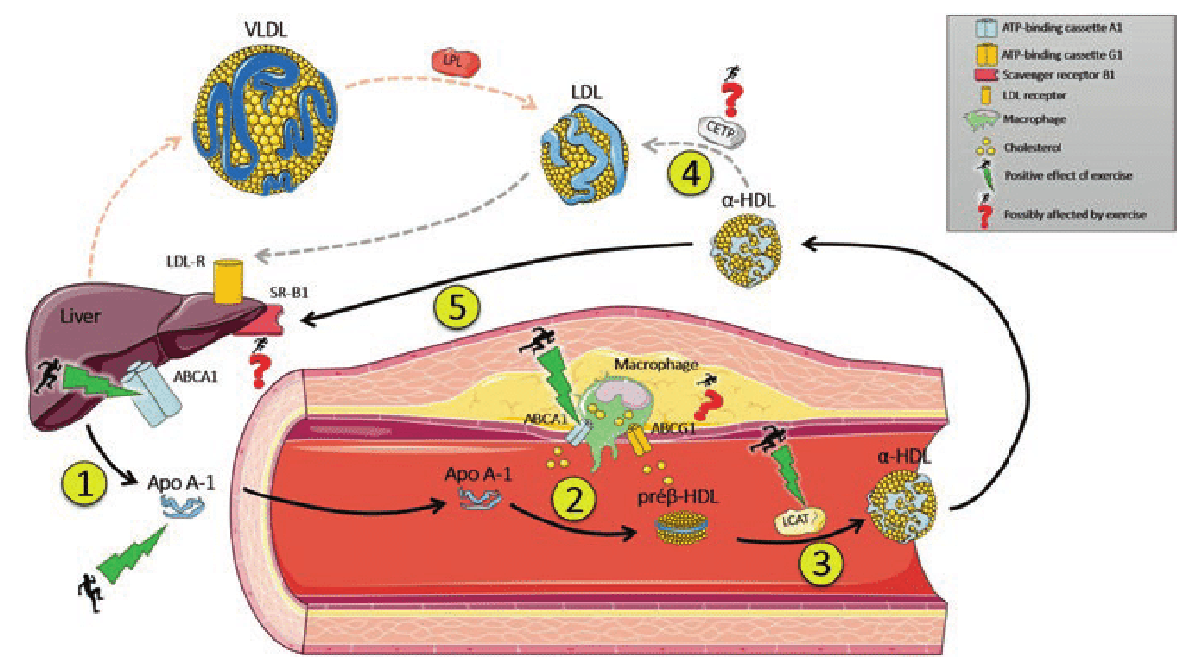
Each step has an exact science and precise levers you can pull.
This week, we will focus on Phase I: Activate, and its first three steps, which spell: AMP.
Awaken Cholesterol Efflux (Step 1)
Mobilize ApoA-I (Step 2)
Prime LCAT (Step 3)
Step 1: Awaken Cholesterol Efflux
The Emergency Exit That Nobody Knows Is Armed
“The gate is ancient. Your only job is to stop blocking it. Every plant-based meal is the key to unlocking it while every gram of saturated fat keeps it locked.”
Kevin Ham, MD
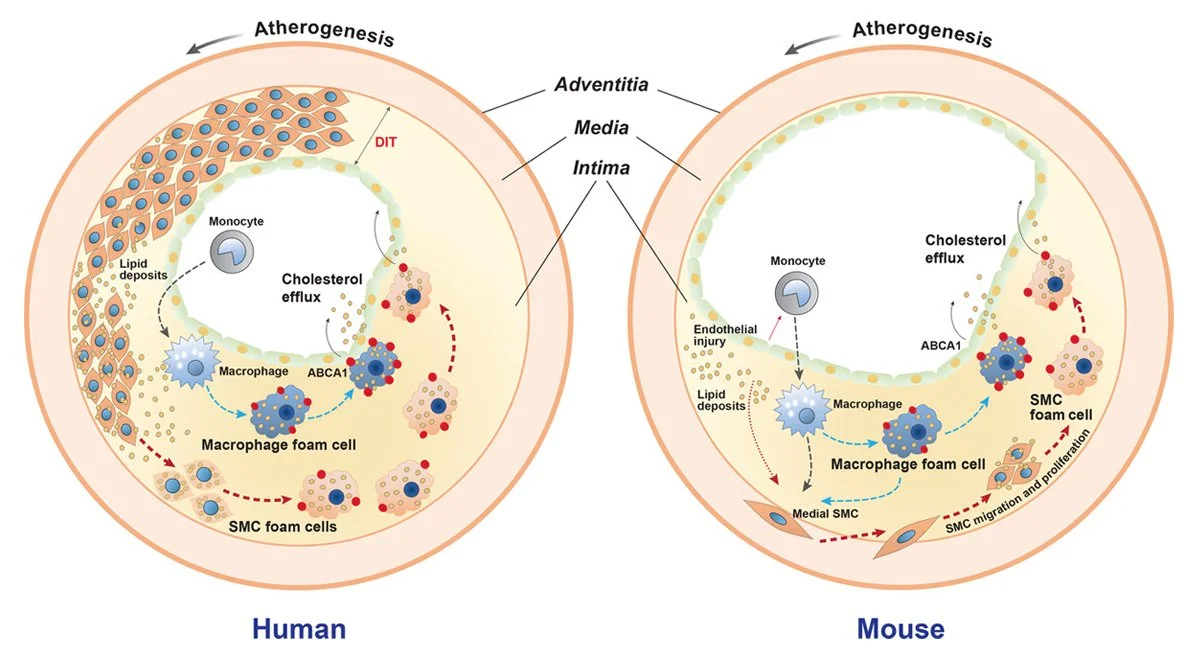
Inside every foam cell embedded in your arterial plaque is a protein called ABCA1 (a Binding Cassette A1) on its outer membrane. ABCA1 is a molecular emergency exit. When it opens, it pumps cholesterol out of the cell and onto passing HDL particles in the bloodstream. The foam cell has been reaching for a rope for years. The question is whether you are giving it one.
The lock on this exit is a nuclear receptor called LXR (liver X receptor).
Every vegetable and legume you eat contains phytosterols that bind LXR and activate it directly, a mechanism confirmed across multiple published trials.
Exercise shear stress above 80 percent of maximum heart rate triggers nitric oxide synthesis through eNOS that opens the gate from outside.
Saturated fat suppresses LXR and keeps ABCA1 shut.
This is the most critical step of the 9-step Reverse Cholesterol Transport pathway. Without it, the engine doesn’t start.
WHAT BLOCKS IT:
Saturated fat: directly suppresses LXR and prevents ABCA1 expression in macrophages
Oxidized LDL: drives continued cholesterol uptake faster than efflux can remove it
Hyperglycemia: glycates apoA-I and impairs the ABCA1 cholesterol loading interaction
WHAT ACCELERATES IT:
Plant phytosterols: LXR activation confirmed in published trials; every plant-based meal signals ABCA1 to open
High-intensity exercise above 80% max HR: shear stress activates eNOS and endothelial nitric oxide, activating ABCA1
Fasting and AMPK activation: Fasting activates AMPK, which stabilizes ABCA1 at the macrophage cell surface
Step 2: Mobilize ApoAI
“You cannot collect what you never sent to collect. Every reverse cholesterol transport system begins with the decision to dispatch the vehicle. Your liver makes that decision. Those shuttles are ApoA1. Your diet and exercise power it.”
Kevin Ham, MD
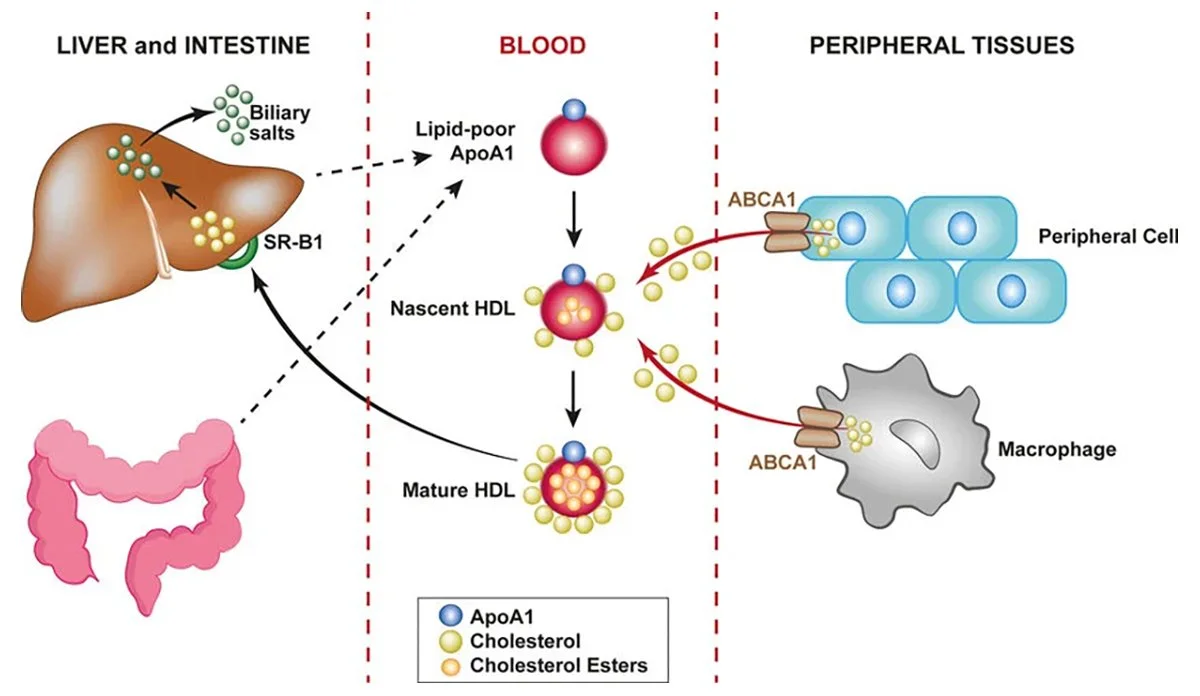
Brouillette et al., Biochim Biophys Acta 2001, Fig. 1
Your liver manufactures apolipoprotein A-I continuously and dispatches it into the bloodstream as a nearly lipid-free particle. ApoA-I is the empty truck. It carries no cargo. It circulates, seeking a foam cell with an open ABCA1 gate so it can accept a first load of cholesterol and initiate the reverse cholesterol transport cascade.
An open exit door means nothing if no truck is waiting outside. Think of apoA-I as a delivery fleet. Dispatching more trucks means more pickups completed per hour. Fewer trucks means packages pile up on the doorstep even when the door is wide open. Your liver is the fulfillment center. Your daily choices are the dispatcher.
WHAT BLOCKS IT:
Processed diet and liver dysfunction: reduces hepatic apoA-I synthesis; fewer trucks dispatched
Smoking: directly oxidizes and degrades the apoA-I protein structure in circulation
Chronic systemic inflammation: serum amyloid A displaces apoA-I on HDL particles and degrades their function
WHAT ACCELERATES IT:
Whole food plant-based diet: increases hepatic apoA-I synthesis at the source
Fasting: upregulates apoA-I production and reduces apoA-I catabolism
Regular aerobic exercise: increases the rate apoA-I cycles through arterial tissue each day
Step 3: Prime LCAT
The Garbage Compactor That Makes the Truck Useful
“Capacity is not determined by how many vehicles you have. It is determined by how much each vehicle can carry. Protect the compactor and every truck becomes a freight train.”
Kevin Ham, MD
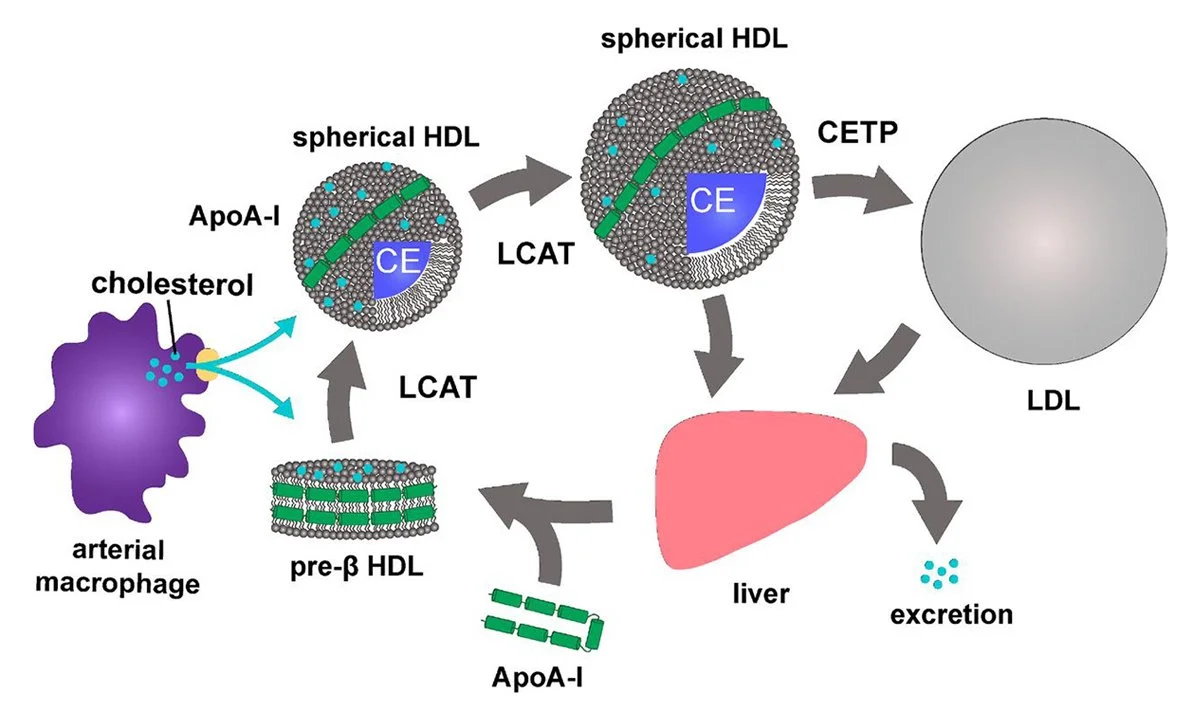
Glomset, J Lipid Res 1968, Fig. 1
The LCAT esterification reaction: free cholesterol on HDL surface is converted to cholesterol ester and moves to the hydrophobic core, expanding particle from a flat disc (nascent HDL) to HDL3 sphere to HDL2 sphere.
A nascent HDL particle is tiny and flat, like a small coin, and fills up quickly at the surface. This is where LCAT enters. Lecithin-cholesterol acyltransferase (LCAT) is an enzyme traveling on the HDL surface. It converts loose surface cholesterol into cholesterol ester and packs it into the particle core, freeing the surface for another full load. LCAT is activated by apoA-I and is the enzyme responsible for HDL maturation; this mechanism is well established in the published biochemistry literature.
Without LCAT running, the truck fills up after a few houses. With it running, the same truck covers fifty houses per run. But apoA-I must be structurally intact to activate LCAT. Oxidative stress from processed foods and chronic inflammation damage apoA-I and silence the compactor entirely, which is why HDL particles can be numerous in the blood yet functionally impaired.
WHAT BLOCKS IT:
Oxidative damage to apoA-I: from processed food, smoking, and chronic inflammation; prevents LCAT activation
Serum amyloid A: displaces apoA-I from the HDL particle surface during acute phase responses
Low HDL phospholipid content: insufficient phospholipid substrate for the LCAT transesterification reaction
WHAT ACCELERATES IT:
Pomegranate juice 50ml once or twice daily: (after meals, then walk) activates PON1 antioxidant enzyme on HDL, protecting apoA-I from oxidation; confirmed in Aviram et al. studies
Algae-derived EPA and DHA: incorporate into HDL membrane phospholipids, improving fluidity and LCAT activation efficiency
Aged garlic extract 2,000mg: reduces systemic inflammation and oxidative stress that damages apoA-I structure
Some steps are running well. Some are blocked. The question is which ones, and which levers to pull first.
Like waves of water on rock, daily compounding with many small correct decisions is what running all nine steps feels like. The direction is clear. The biology is responding. Give the cleanup crew the conditions they need to do their job of healing.
Seems complicated yet its so beautiful and simple. A well orchestrated system that heals when we give it the right lifestyle conditions to operate smoothly, like it was meant to be.
Your Questions
“The educated soul can be healthy through its lifestyle, set by its heart and its mind. Heartset and Mindset.”
Kevin Ham, MD
Questions worth sitting with
For yourself. For someone you love. Answer them in the quietness of your day.
1. Awaken: What did you eat today and did it open the ABCA1 gate or close it?
Every gram of saturated fat you consume suppresses LXR and closes the exit hatch on your foam cells. Every legume and vegetable activated it. Look at your last three meals and name one specific change to tomorrow’s first meal that arms the gate.
2. Mobilize: When will you help ApoA1?
Whole food, plant-based diet. Eat greens, move them through exercise and rest (fast) to boost their production.
3. Prime: How will you reduce oxidation today?
Compact your garbage cholesterol trucks (HDL) by activating PON1 and LCAT. Pomegranate juice. Get some at your organic health food store. Just 50 ml a day or twice a day, at the end of your meals and then walk for 15 minutes.
For Someone You Love
There is someone in your life running their nine steps poorly right now. You thought of them. Send this to them. The system is universal in human biology. The endothelium that repaired my carotid arteries responds to the same signals as the endothelium in our coronary arteries. Your loved ones just need the information to act and a guide to help them.
MORE READINGS YOU’LL ENJOY
Health
Watch: The 2 Foods That Reverse Heart Plaque (Half a Million Views)
Reversing My 77% Heart Plaques
Stats Say You Likely Have Heart Plaque
The Healing Power of Food: Nitric Oxide
Meaning
The Courage to Your Magnum Opus
APPENDIX
The published research underlying the nine-step reverse cholesterol transport framework
Reverse Cholesterol Transport: Foundational Science
Glomset JA. The plasma lecithins:cholesterol acyltransferase reaction. Journal of Lipid Research. 1968;9(2):155-167. [Foundational paper naming reverse cholesterol transport and describing the LCAT-driven HDL maturation mechanism.]
Tall AR. Plasma high density lipoproteins: metabolism and relationship to atherogenesis. Journal of Clinical Investigation. 1990;86(2):379-384.
Oram JF, Heinecke JW. ATP-binding cassette transporter A1: a cell cholesterol exporter that protects against cardiovascular disease. Physiological Reviews. 2005;85(4):1343-1372. [Comprehensive review of ABCA1 biology.]
LXR Signaling, ABCA1 and Plant Phytosterols
Tontonoz P, Mangelsdorf DJ. Liver X receptor signaling pathways in cardiovascular disease. Molecular Endocrinology. 2003;17(6):985-993. [LXR as master regulator of ABCA1 and cholesterol efflux.]
Repa JJ, Mangelsdorf DJ. The liver X receptor gene team: potential new players in atherosclerosis. Nature Medicine. 2002;8(11):1243-1248.
Cholesterol Efflux Capacity and Cardiovascular Outcomes
Khera AV, Cuchel M, de la Llera-Moya M, et al. Cholesterol efflux capacity, high-density lipoprotein function, and atherosclerosis. New England Journal of Medicine. 2011;364(2):127-135. [Key Rader group study showing CEC predicts CV events independently of HDL-C level.]
Rohatgi A, Khera A, Berry JD, et al. HDL cholesterol efflux capacity and incident cardiovascular events. New England Journal of Medicine. 2014;371(25):2383-2393. [Prospective confirmation: highest CEC quartile had 67% fewer events.]
CETP Inhibitor Trial Failures
Barter PJ, Caulfield M, Eriksson M, et al. Effects of torcetrapib in patients at high risk for coronary events. New England Journal of Medicine. 2007;357(21):2109-2122. [Torcetrapib increased mortality despite raising HDL-C.]
Schwartz GG, Olsson AG, Abt M, et al. Effects of dalcetrapib in patients with a recent acute coronary syndrome. New England Journal of Medicine. 2012;367(22):2089-2099. [Dalcetrapib: no benefit.]
Lincoff AM, Nicholls SJ, Riesmeyer JS, et al. Evacetrapib and cardiovascular outcomes in high-risk vascular disease. New England Journal of Medicine. 2017;376(20):1933-1942. [Evacetrapib: no benefit despite substantial HDL-C increase.]
Esselstyn Protocol and Plaque Regression
Esselstyn CB Jr, Gendy G, Doyle J, Golubic M, Roizen MF. A way to reverse CAD? Journal of Family Practice. 2014;63(7):356-364. [198 patients; 177 compliant had 1 event vs 62 in non-compliant group.]
Esselstyn CB Jr. Resolving the Coronary Artery Disease Epidemic Through Plant-Based Nutrition. Preventive Cardiology. 2001;4(4):171-177.
FXR, FGF19, and the Bile Acid-CYP7A1 Axis
Inagaki T, Choi M, Moschetta A, et al. Fibroblast growth factor 15 functions as an enterohepatic signal to regulate bile acid homeostasis. Cell Metabolism. 2005;2(4):217-225. [Established the FXR-FGF15/19-CYP7A1 feedback axis.]
Lefebvre P, Cariou B, Lien F, Kuipers F, Staels B. Role of bile acids and bile acid receptors in metabolic regulation. Physiological Reviews. 2009;89(1):147-191
Soluble Fiber and Bile Acid Elimination
Anderson JW, Baird P, Davis RH Jr, et al. Health benefits of dietary fiber. Nutrition Reviews. 2009;67(4):188-205. [Comprehensive review of soluble fiber mechanisms including bile acid binding.]
Ripsin CM, Keenan JM, Jacobs DR Jr, et al. Oat products and lipid lowering: a meta-analysis. JAMA. 1992;267(24):3317-3325. [Confirmed oat beta-glucan bile acid binding and LDL reduction in randomized trials.]
Gibb RD, McRorie JW Jr, Russell DA, Hasselblad V, D’Alessio DA. Psyllium fiber improves glycemic control proportional to loss of glycemic control: a meta-analysis of data in euglycemic subjects, patients at risk of type 2 diabetes mellitus, and patients being treated for type 2 diabetes mellitus. American Journal of Clinical Nutrition. 2015;102(6):1604-1614.
Pomegranate and PON1 Protection of HDL
Aviram M, Rosenblat M, Gaitini D, et al. Pomegranate juice consumption for 3 years by patients with carotid artery stenosis reduces common carotid intima-media thickness, blood pressure and LDL oxidation. Clinical Nutrition. 2004;23(3):423-433.
Aviram M, Dornfeld L, Rosenblat M, et al. Pomegranate juice consumption reduces oxidative stress, atherogenic modifications to LDL, and platelet aggregation: studies in humans and in atherosclerotic apolipoprotein E-deficient mice. American Journal of Clinical Nutrition. 2000;71(5):1062-1076.
Exercise, eNOS, and Endothelial Nitric Oxide
Hambrecht R, Wolf A, Gielen S, et al. Effect of exercise on coronary endothelial function in patients with coronary artery disease. New England Journal of Medicine. 2000;342(7):454-460. [Exercise increases endothelial NO production and improves coronary flow.]
Niebauer J, Cooke JP. Cardiovascular effects of exercise: role of endothelial shear stress. Journal of the American College of Cardiology. 1996;28(7):1652-1660.
SR-B1 and Hepatic Cholesterol Delivery
Acton S, Rigotti A, Landschulz KT, et al. Identification of scavenger receptor SR-BI as a high density lipoprotein receptor. Science. 1996;271(5248):518-520. [Original identification of SR-B1 as the hepatic HDL receptor.]
Krieger M. Charting the fate of the "good cholesterol": identification and characterization of the high-density lipoprotein receptor SR-BI. Annual Review of Biochemistry. 1999;68:523-558.
Appendix compiled for educational purposes. Full citations available at ham.com.
I pray you unlock your heart to reach the height of your full potential by discovering your calling.
Kevin Ham, MD
Subscribe to my Compounding Wisdom newsletter and start transforming your life. ham.com
Subscribe to my YouTube channel @DrKevinHam for videos on how I reversed my clogged arteries in 3 months, the top foods that clear your arteries, and the first principles of health that can save your life. Like, share and subscribe — it could save the life of someone you love.
