
Plaque Progression, Arrest or Reversal?
Plaque regression needs the necessary environment, much of this arising from lifestyle with nuances.
Dr. Kevin Ham, MD
I just came back from a two week vacation in Kauai, my first time there. The island was so lush and green, like a rain forest, which meant it rained every single day, although like tropical rainstorms that came just as quickly as they left. My goal was to ground or earth daily, get lots of sunshine for Vitamin D and my eyes and repay my 12.5 hour sleep debt. Mission accomplished. It also left me time to ponder my past year of healthy living, going vegan or rather whole food plant-based, low fat.
I asked myself, am I truly whole food plant-based? I was eating lots of sourdough bread (half whole grain), but when I went out or travelled, pastas and pizzas, which are refined flour. I sampled cookies (oatmeal raisin sourdough cookies) twice a month and occasionally ate white rice when there were no other options, about twice a month. Refined carbs instead of whole foods or whole grains. My oatmeal, although they were steel cut, I deemed still as whole grains, although technically oat groats would be better.
In August 2025 my apolipoprotein B was 45. My LDL cholesterol was 61, HDL 62, triglycerides 61. That was the window in which my carotid intima media thickness fell from 1.8 and 1.6 millimeters to 0.84 and 0.86 and all of my carotid plaque regressed.Regression was not a theory in that window. It was a measurement. I had been on the Esselstyn protocol for 3 months, and I was following it without negotiation. This was from an LDL of 186 in just 12 weeks!
Since then I have run experiments on myself based on studies. Three walnuts a day. Three olives a day.
I also started eating a whole pomegranate daily on top of an already generous berry load. Each addition was small. None of them felt like a departure. Over the following 12 months my LDL has run between 67 and 80, my ApoB between the mid 60s and low 70s, and my triglycerides touched a high of 103. My HDL is stable. That combination is not a random drift. It is a signature where plaque grows steadily.
When ApoB rises, triglycerides rise, and HDL stays flat, the liver is telling you it is exporting more very low density lipoprotein than it used to. That is a carbohydrate and energy handling pattern, not a dietary cholesterol pattern. And it matters more than the LDL number alone suggests, because ApoB counts particles. One ApoB molecule sits on every atherogenic particle, and it is particles, not the cholesterol they happen to be carrying, that lodge in the arterial wall. Going from 45 to 71 is not a 26 point inconvenience. It is ~50% more atherogenic particles arriving at the endothelium every hour of every day for a year.
Because I knew pomegranate juice was so beneficial, I drank 100 ml twice a day instead of my usual 50 ml and I added a whole pomegranate fruit a day. In Jan 2026, my triglycerides spiked from 61 all the way up to 103, still normal, but high TG lead to more very low density lipoproteins (VLDL), which lead to more LDL, especially the smaller kind that carries less cholesterol and more ApoB. I’ve since stopped the whole pomegranate fruit and my TG as of June is 83. I’ve regressed too much in my discipline to be in plaque reversal mode.
So I’ve decided to go back to how disciplined I was in my first three months from May 9 to August 31, 2025. Simple whole foods. I cut out almost all my supplements that I added and just keeping Spirulina and nattokinase with occasional Omega 3 and likely will add back Vitamin D in the winter.
I will also swap out wheat for barley, which will remove bread and pizza. I will try the occasional cauliflower pizza crust vegan pizza (no oils). Then test my labs Aug 4 for new baseline and early to mid September to see the effects in 4-6 weeks and then again at week 8 and then week 12.
I also reflected on Dr. Esselstyn’s star case of Dr. Joe Crowe. Which brings me to the number I actually want. Joe Crowe was 44 when his distal LAD occluded beyond the reach of a stent or a graft. He declined a statin, went on the 10 percent fat whole food plant based protocol, brought his total cholesterol to 98 and his LDL to 38, and his follow up angiogram showed the vessel filling again just 30 months (2.5 years) later. Those two angiograms sit side by side in Esselstyn's book and they are, to me, the most consequential pair of images in cardiology.
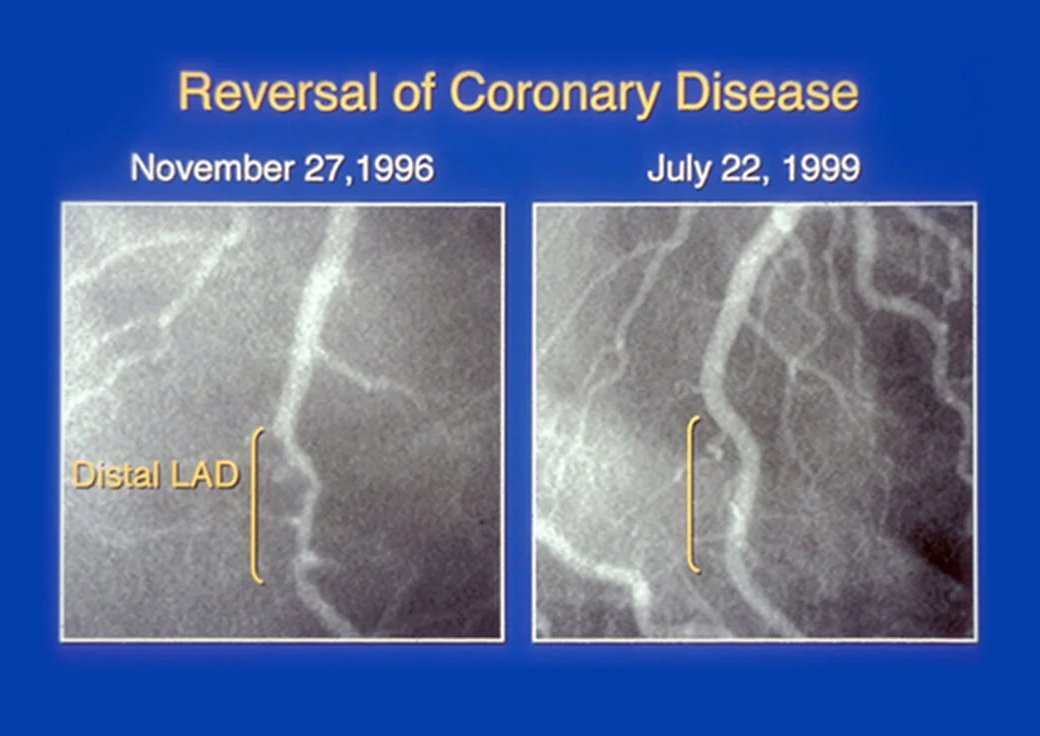
I would like LDL 38. At maximal adherence in 2025 I reached 61, not 38. Crowe reached a total cholesterol of 98 on diet alone, which places him in genuine hyper responder territory. He was 44 with an acute lesion. I am 55 with a calcium score of 505, multi vessel disease, and plaque that is older, more fibrous, and 1/3 calcified. Calcified plaque does not regress easily. Roughly two thirds of my burden is non calcified, and that fraction is the part still in play. So let’s see what the next three months show in my labs. I’ve deeply pondered and researched what it would take to get my LDL < 55 and closer to 40.
Bread and Bile Acids
“Oat bran measurably stimulated bile acid synthesis within 8 hours of a single meal.”
Andersson, Ellegard and Andersson. American Journal of Clinical Nutrition, 2002
Beta glucan is a soluble fiber built from glucose units joined in a mixed pattern of beta 1,3 and beta 1,4 linkages. That mixed linkage is the whole story. A pure beta 1,4 chain is cellulose, which packs into rigid crystalline fibers and dissolves in nothing. Scatter beta 1,3 bonds through the chain and the molecule can no longer pack. It becomes irregular, hydrated, and enormously viscous in water. Beta glucan does not lower cholesterol because it is fiber. It lowers cholesterol because it is thick.
In the small intestine that viscosity slows the mixing of bile acids with the food they are meant to emulsify. Bile acids are the body's detergent, synthesized in the liver directly from cholesterol, secreted into the gut, and then reclaimed. Under normal conditions roughly 95 percent of the bile acid pool is reabsorbed in the terminal ileum (last part of the small intestine) and shipped back to the liver. It is one of the most efficient recycling systems in human physiology. Viscous beta glucan interferes with that recovery, trapping bile acids in the gel phase and carrying them out in the stool.
The liver notices immediately. Losing bile acids means losing the negative feedback signal that normally restrains their production, so the enzyme cholesterol 7 alpha hydroxylase, CYP7A1, is upregulated and the liver begins converting more cholesterol into bile acids to rebuild the pool. That draws down the hepatic free cholesterol pool. A depleted hepatic cholesterol pool activates SREBP-2, which upregulates the LDL receptor on the liver surface. More LDL receptors means more LDL and more ApoB particles pulled out of the bloodstream and cleared. This is precisely the mechanism of the bile acid sequestrant drug class (Cholestyramine), and it is downstream of the same receptor that statins and PCSK9 inhibitors act on from a different angle.
There is a second mechanism operating further down. Beta glucan that survives to the colon is fermented by gut bacteria into short chain fatty acids, particularly propionate. Propionate is absorbed into the portal vein and delivered straight to the liver, where evidence suggests it dampens hepatic cholesterol synthesis. The bile acid mechanism is the dominant one and the best documented. The fermentation mechanism is real, additive, and slower to show up.
3g of Beta Glucan
“Across 14 randomized trials, barley beta glucan lowered LDL cholesterol, non HDL cholesterol and apolipoprotein B.”
Ho, Sievenpiper, Zurbau and colleagues. European Journal of Clinical Nutrition, 2016.
The regulatory threshold on both sides of the Atlantic is 3 grams of beta glucan per day, and the trial evidence supports it. The 2014 meta analysis by Whitehead and colleagues pooled 28 randomized controlled trials of oat beta glucan at or above 3 grams daily and found LDL cholesterol reduced by about 0.25 millimoles per liter, on the order of 4 to 5 percent. The 2016 barley meta analysis by Ho and colleagues found a comparable LDL reduction of about 0.25 millimoles per liter, and it did something the older literature mostly did not. It measured ApoB. Barley beta glucan reduced apolipoprotein B by roughly 15 mg/dL, which is the endpoint I actually care about.
Notice the size of that effect honestly. This is not a statin. A 4 to 7 percent LDL reduction from my current 66 to 80 range moves me a few points, not 20. It is worth having, it is free, it stacks with everything else, and it is the wrong thing to build a strategy around by itself. The larger prize in this issue is what comes out of the diet, not what goes in.
The practical question is how much food 3 grams represents. Most people assume a bowl of oatmeal covers it. It does not, quite, and barley varies more than the packaging suggests.
Table 1 Reaching 3 grams of beta glucan per day
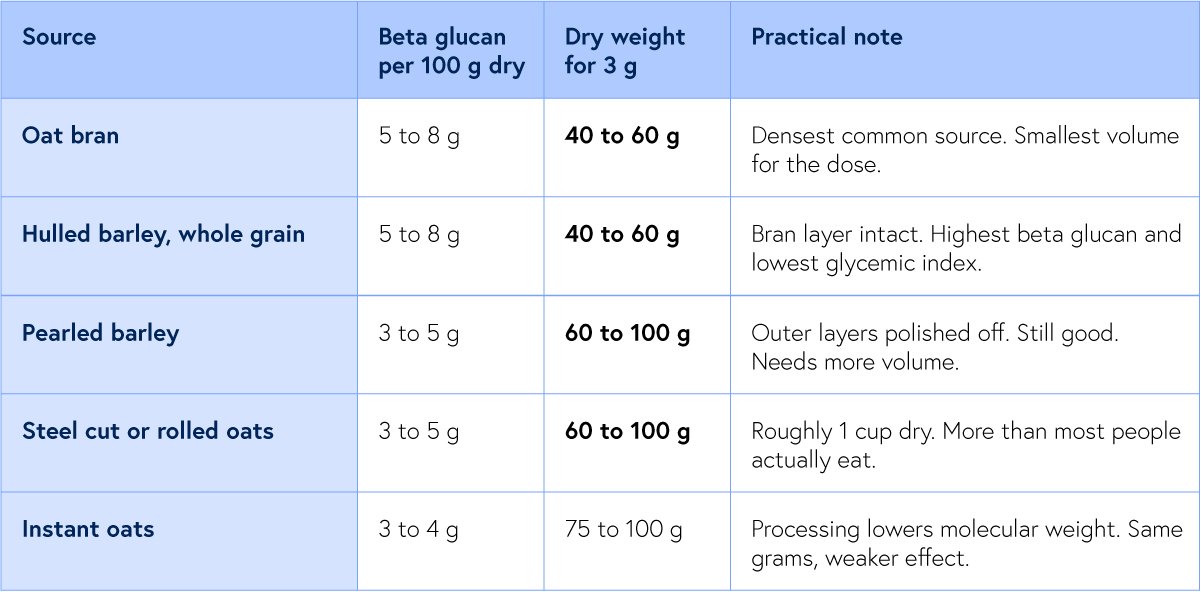
Ranges reflect genuine varietal and analytical variation. Barley cultivars bred for high beta glucan run considerably higher. Weigh dry, not cooked.
One detail in the literature deserves more attention than it gets. Wolever and colleagues showed in a randomized trial that the molecular weight of the beta glucan, not just the quantity, determines how much LDL comes down. High molecular weight beta glucan performed substantially better than the same gram dose after the polymer had been degraded. Grams on a label are not the active dose. Intact viscous polymer is the active dose. Extrusion, fine milling, and prolonged high heat all shorten the chains and thin the gel. This is the same principle that makes an apple different from apple juice, expressed at the level of a single polysaccharide.
The instruction that follows is unglamorous. Cook whole hulled barley or steel cut oats. Do not buy a beta glucan supplement, do not use instant products, and do not blend the finished porridge into a smoothie under the impression you are improving it.
How to make more Resistant Starch
“Cooling cooked white rice raised its resistant starch content and lowered the glycemic response when it was reheated.”
Sonia, Witjaksono and Ridwan. Asia Pacific Journal of Clinical Nutrition, 2015.
Beta glucan is not the only fermentable fraction in a bowl of barley. A portion of the starch itself escapes digestion in the small intestine entirely and arrives in the colon intact, where bacteria ferment it into short chain fatty acids. This fraction is called resistant starch, and it is classified as a carbohydrate on the label while behaving in the body like fermentable soluble fiber. It yields roughly 2 kilocalories per gram rather than 4. Resistant starch is the part of a starchy food that never becomes glucose.
The classification devised by Englyst and Cummings divides it into 4 types, and the distinction is practical rather than academic, because 2 of the 4 are things I can deliberately create or destroy in my own kitchen.
Table 2 The 4 types of resistant starch
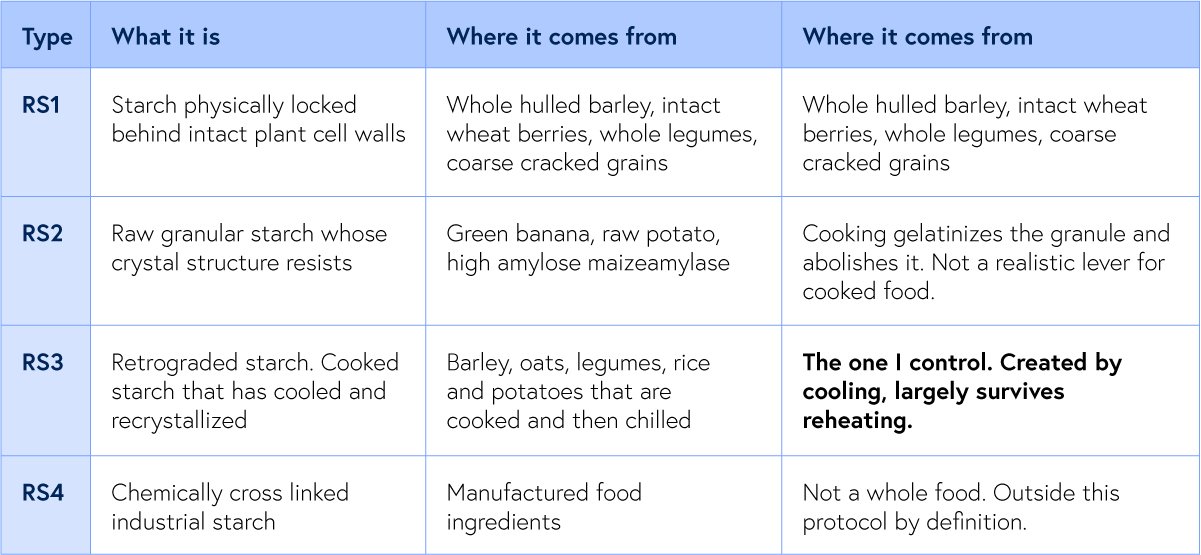
Legumes carry both RS1 and RS3 and are the densest whole food source. Lentils, black beans and chickpeas are already doing this work.
Colonic bacteria convert resistant starch chiefly into butyrate, acetate and propionate. Butyrate is the preferred fuel of the colonocyte and is anti inflammatory locally. Propionate is absorbed into the portal vein and delivered directly to the liver, where the evidence suggests it restrains hepatic cholesterol synthesis. That is the same secondary pathway I described for beta glucan fermentation. Whole hulled barley delivers viscosity and fermentable substrate from a single food, which is why it is the specific grain I am adding to my diet in addition to the steelcut oatmeal that I already eat.
The cook and cool instruction is simple and worth doing precisely. Cook the barley normally, then refrigerate it for at least 12 hours, overnight. As the gelatinized starch cools, amylose chains realign into tight crystalline structures that amylase cannot open, and RS3 forms. The useful part is what happens next. Retrograded amylose has a considerably higher melting temperature than the original gelatinized granule, so ordinary reheating does not undo it. Cook a large batch on Sunday, refrigerate it, and reheat portions through the week. The cooling is the active step and it costs nothing but planning. The same applies to rice, potatoes and legumes, and it is the single easiest glycemic improvement available in a plant based kitchen.
The evidence for resistant starch is strong and consistent for postprandial glucose, insulin sensitivity and colonic health, and it is considerably weaker and less consistent for LDL cholesterol specifically. The 2019 meta analysis by Wang and colleagues found reliable effects on glucose and insulin measures and inconsistent effects on lipids. Typical intake in a Western diet runs 3 to 8 grams daily, while most benefit estimates sit nearer 15 to 20 grams. Treat resistant starch as a glycemic and colonic lever that supports the ApoB work indirectly. It is not a substitute for the 3 gram beta glucan target and it is not a lipid intervention in its own right.
Different Branches Make Different Starches
“Diets high in amylose produced lower glucose and insulin responses than diets high in amylopectin in human subjects.”
Behall, Scholfield and Hallfrisch. American Journal of Clinical Nutrition, 1988.
Starch is one word for two different molecules, and almost everything that matters about a grain metabolically comes down to the ratio between them.
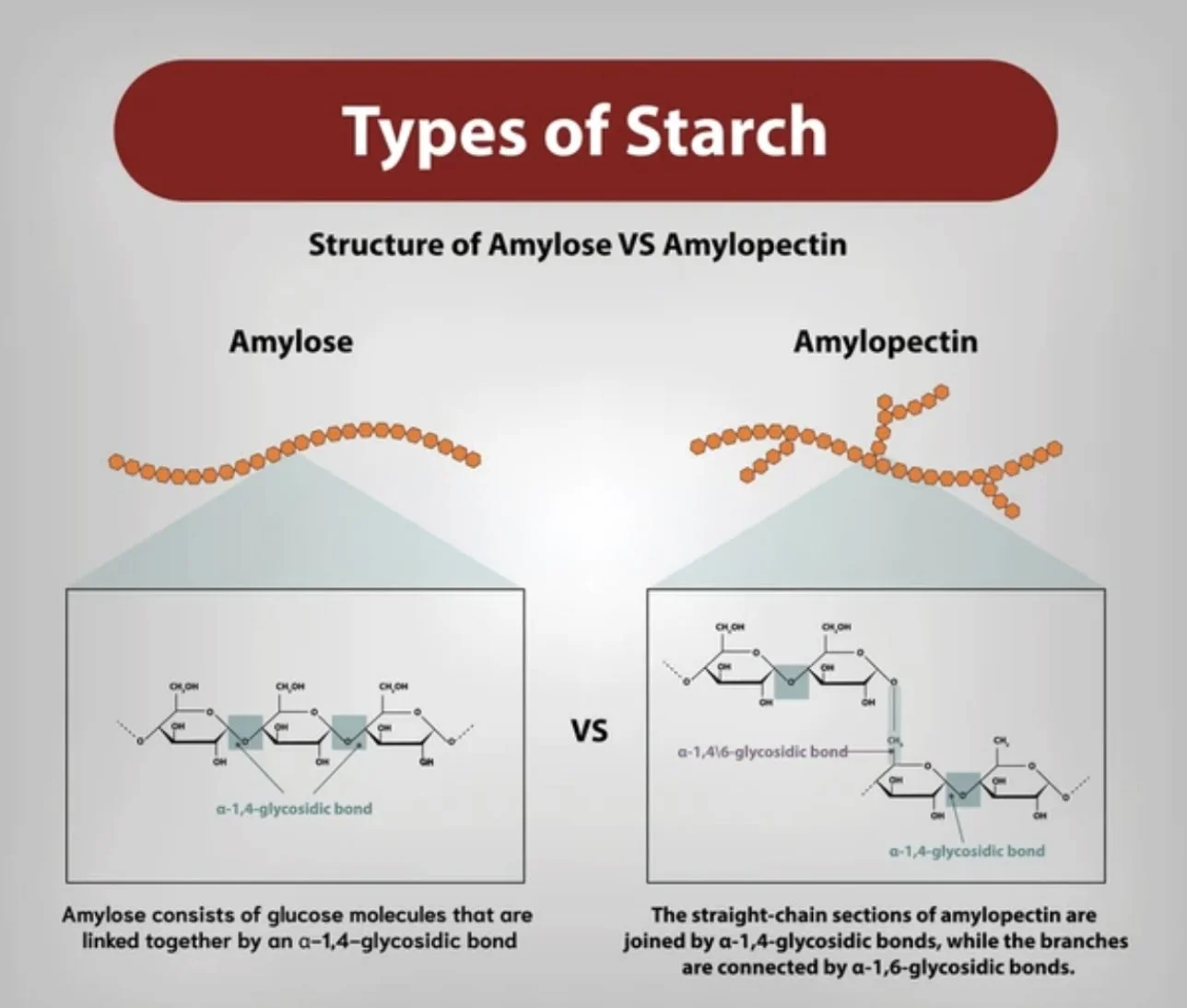
Amylose is a long, essentially linear chain of glucose units joined by alpha 1,4 bonds. It coils into a tight helix, packs closely with its neighbors, and resists the enzymes that want to take it apart. When cooked starch cools, amylose is the fraction that recrystallizes, a process called retrogradation, and the retrograded product is resistant starch type 3, which behaves in the colon more like fiber than like sugar.
Amylopectin is the same glucose backbone with a branch thrown off roughly every 24 to 30 units by an alpha 1,6 bond. Those branches make it enormous, bushy, and unable to pack. It is highly hydrated, gelatinizes readily under heat and water, and it presents a very large number of exposed chain ends. Every branch point creates another free end, and every free end is another site where amylase can begin cutting. Alpha amylase in saliva and pancreatic juice attacks internal alpha 1,4 bonds, and the brush border enzymes finish the job at the ends. A branched molecule is not digested faster because it is somehow weaker. It is digested faster because the enzymes can work on hundreds of sites at once instead of a few.
This is a structural fact with a clinical consequence. Behall and colleagues fed human subjects diets matched for total starch but differing in amylose to amylopectin ratio and found that the high amylose diets produced lower glucose and insulin responses acutely, and in longer feeding studies produced lower total and LDL cholesterol.The same number of grams of starch, arranged differently, produced different lipids.
Table 3 Starch architecture and glycemic behavior
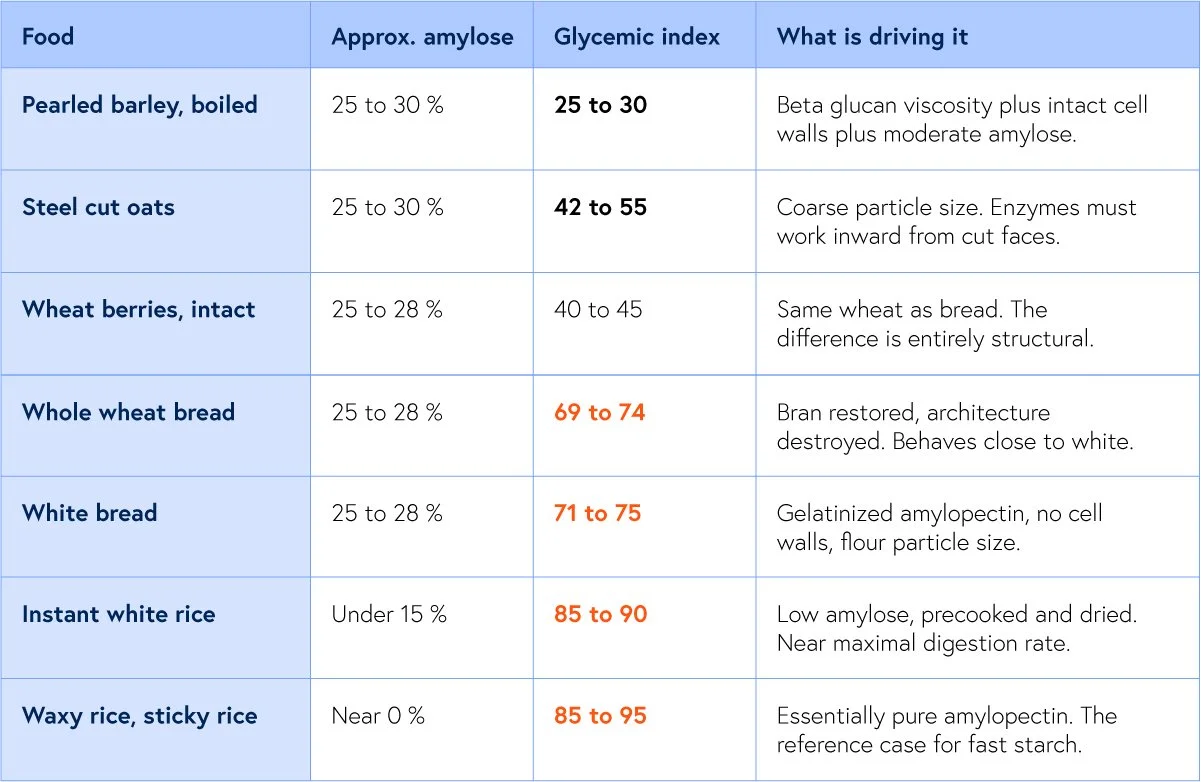
Glycemic index values are population means with wide individual variation, drawn from the international glycemic index tables.
Whole wheat bread and intact wheat berries are chemically the same starch, and they behave 30 glycemic points apart. Nothing was added or removed except structure. This is the single most useful thing I have learned about grains, and it is why the word whole on a bread bag can lead you astray.
From Starch to Atherogenic Particle Count
“Human fatty acid synthesis is stimulated by a eucaloric low fat, high carbohydrate diet.””
Hudgins, Hellerstein, Seidman and colleagues. Journal of Clinical Investigation, 1996.
Very scientific and better illustrated by a diagram, but it makes so much sense to me now 🙂
Here is the bridge between a starch molecule and an ApoB number, and it runs through the liver.
Rapidly digested amylopectin from flour produces a fast, high glucose excursion and a correspondingly sharp insulin response. Insulin does far more than move glucose into cells. In the hepatocyte it activates the transcription factor SREBP-1c, which turns on the enzymes of de novo lipogenesis, chiefly acetyl CoA carboxylase and fatty acid synthase. The liver begins converting surplus carbohydrate into palmitate, esterifies it into triglyceride, packages that triglyceride with apolipoprotein B, and secretes it as very low density lipoprotein (VLDL).
That VLDL does not simply circulate and clear. In the plasma, cholesteryl ester transfer protein (CETP) swaps triglyceride out of VLDL in exchange for cholesteryl esters taken from LDL and HDL particles. The LDL particle that receives triglyceride is then acted on by hepatic lipase, which strips the triglyceride out and leaves behind a smaller, denser particle carrying less cholesterol. HDL undergoes the same exchange and the triglyceride enriched HDL is catabolized faster, which is why HDL falls in this pattern. The result is more particles, each carrying less cholesterol, which is exactly how ApoB can climb while LDL cholesterol looks tolerable.
Small dense LDL particles are also more atherogenic per particle. They penetrate the endothelium more readily, bind more avidly to arterial wall proteoglycans, resist receptor mediated clearance, and oxidize more easily. A drifting ApoB with rising triglycerides is therefore worse than the arithmetic looks, because both the number and the quality of the particles have moved in the wrong direction.
Now the part that a whole food plant based reader needs to sit with. Hudgins, Hellerstein and colleagues showed that a low fat, high carbohydrate diet fed at maintenance calories stimulates hepatic fatty acid synthesis. Cutting fat to under 25 grams a day does not protect me from carbohydrate driven VLDL production. If anything it removes the competing fuel and leaves that pathway more exposed. This is the trap hidden inside a well intentioned Esselstyn diet: the dietary fat lever is already pulled all the way down, so the carbohydrate quality lever is the only one left, and refined flour pulls it hard in the wrong direction. My triglyceride of 103 on a diet with almost no fat in it is not a paradox. It is the predicted outcome.
Fructose deserves a footnote here because it explains my fruit experiment. Fructose entering the liver bypasses phosphofructokinase, the main regulated checkpoint of glycolysis, which means it flows toward lipogenic substrate without the feedback control that glucose is subject to. That is why a large fruit load can raise triglycerides. It is also why I am not going to overcorrect. Fruit arrives with its fructose inside a fiber matrix and a large polyphenol load, and refined flour arrives with neither. The flour goes first. If triglycerides normalize, the berries stay.
What Milling Removes
“Higher intakes of dietary fiber and whole grains were associated with lower all cause and cardiovascular mortality across 185 prospective studies and 58 clinical trials.”
Reynolds, Mann, Cummings and colleagues. The Lancet, 2019.
Milling wheat into white flour removes the bran and the germ, and with them roughly 80 percent of the fiber, most of the magnesium, most of the B vitamins, and essentially all of the phytochemical content. That much is common knowledge and it is why enrichment exists. But the nutrient loss is not the main event metabolically.
The main event is the destruction of the cell wall. In an intact grain, starch granules are packaged inside plant cells whose walls are made of cellulose, arabinoxylan and beta glucan. Digestive enzymes cannot cross an intact cell wall. They have to wait for the wall to be breached mechanically or fermented microbially, and that waiting is what makes an intact grain slow. Milling is not a nutritional subtraction. It is the pre digestion of your food before you eat it.
Particle size compounds it. Enzyme activity happens at surfaces, and grinding a grain into flour increases available surface area by orders of magnitude. Then baking gelatinizes the starch, hydrating and unwinding the granules so the amylopectin is fully accessible. Flour, water and heat is an efficient protocol for making glucose available as fast as the small intestine can absorb it. Adding the bran back afterward, which is what whole wheat flour is, restores some fiber and some minerals. It does not restore the cell walls, and the glycemic index tables show it.
This is where I have to be honest about my own reading of the protocol. I have understood whole food plant based to mean plant based with attention to fat. It also means whole. Bread made from flour is a processed food no matter how many seeds are on the crust, and I have been eating it inside a protocol that formally excludes it while telling myself I was compliant. This is not vague theory, and neither is the mechanism.
The same logic disposes of the walnuts and the olives. It is not that 3 walnuts contain 6 grams of fat, although on a target under 25 grams that is a quarter of the daily allowance going to a food the protocol names specifically. It is that Esselstyn excludes nuts, seeds, avocado and olives from the protocol for patients with established coronary disease on endothelial grounds, and Joe Crowe, whose distal LAD refilled on angiography, was not eating them. I ran an experiment against a protocol whose only documented results come from people who did not run that experiment.
I wish to emulate Dr. Joe Crowe’s remarkable plaque reversal with LDL 38.
The target thresholds are worth stating plainly because they differ. The European and Canadian guidelines for very high risk secondary prevention put LDL under 1.4 or even <1.0 millimoles/L, which is about 55 mg/dl, with ApoB under 65. The American guidance sits near LDL 55 and ApoB 55. The cardiologist I spoke with prefers under 40, which is where Crowe landed. At 71, I am not in reversal territory by any of these standards. I am in maintenance territory at best.
If perfect adherence lands me in the low 50s in September, that is a real result and it is still short of 38. That is the point at which the PCSK9 inhibitor question stops being theoretical and becomes a decision to make with my cardiologist rather than a decision to defer. I would rather arrive at that conversation in September with a clean diet experiment behind me and know exactly what the food can and cannot do, than arrive at it having never run the experiment properly. The purpose of maximal dietary adherence is not only the LDL it produces. It is knowing the true size of the gap that remains.
The Discipline of a Single Change
There is a temptation in self experimentation to change 6 things at once because you want the number to move. It can work but it never truly teaches you the insight required. A year of small additions taught me that lesson in the other direction: I added 4 things gradually, none of them individually alarming, and I cannot now say which one cost me the most. What I can say is that the aggregate cost was 26 points of ApoB and the end of measurable regression.
The prudent sees danger and hides himself, but the simple go on and suffer for it. Proverbs 22:3. The verse is usually read as being about foresight, and it is, but there is something else in it. The simple person is not reckless. He is unobservant. He walks past the same warning repeatedly without registering it. My triglyceride of 103 was a warning. But it took months for me to correct my error.
Barley instead of bread is a small thing. It is a beta 1,3 linkage instead of an alpha 1,6 branch, a viscous gel instead of a gelatinized paste, a cell wall intact instead of a cell wall milled away. But the arteries do not respond to intention, and they do not grade on effort. They respond to the number of ApoB particles arriving at the endothelium, hour after hour, for years. Everything in this issue is an argument about how to make that number smaller and keep it there.
Labs on 4 August. Labs again in early September. I will publish both, including the result I do not want.
A Request
Each Friday, I upload a new Youtube video. Please like, comment and subscribe so I can help many others in your network and beyond, it’s my mission to help people avoid the same fate as Rob, the same fate as I could have had. Heart attack, stroke or sudden death.
https://www.youtube.com/@DrKevinHam
My latest video is going viral :) My #1 meal to unclog arterial plaque. Thank you.
Your Question
A question worth exercising with
For yourself. For someone you love. Answer this question in the quietness of your day.
When will you get the Lp(a) blood test if you haven’t already?
For Someone You Love
There is someone in your life running and falling. You thought of them. Send this to them. Your loved ones just need the information to act and a guide to help them.
Keep going. The race is long, the road is beautiful, and the body was built to heal.
Grace, strength and love to you.
MORE READINGS YOU’LL ENJOY
Health
Reversing My 77% Heart Plaques
Stats Say You Likely Have Heart Plaque
The Healing Power of Food: Nitric Oxide
Meaning
I pray you unlock your heart to reach the height of your full potential by discovering your calling.
Kevin Ham, MD
Appendix:
Studies and Sources
Beta glucan and viscous fiber
Whitehead A, Beck EJ, Tosh S, Wolever TMS. Cholesterol lowering effects of oat beta glucan: a meta analysis of randomized controlled trials. American Journal of Clinical Nutrition. 2014;100(6):1413 to 1421.
Pooled 28 randomized trials. At or above 3 grams of oat beta glucan daily, LDL cholesterol fell by approximately 0.25 mmol/L with no adverse effect on HDL or triglycerides. The trial base for the 3 gram threshold.
Ho HVT, Sievenpiper JL, Zurbau A, et al. The effect of oat beta glucan on LDL cholesterol, non HDL cholesterol and apoB for CVD risk reduction: a systematic review and meta analysis of randomised controlled trials. British Journal of Nutrition. 2016;116(8):1369 to 1382.
Fifty eight trials. Confirmed reductions in LDL and non HDL cholesterol and, importantly, in apolipoprotein B. One of the few fiber meta analyses to report a particle count endpoint.
Ho HVT, Sievenpiper JL, Zurbau A, et al. A systematic review and meta analysis of randomized controlled trials of the effect of barley beta glucan on LDL-C, non HDL-C and apoB for cardiovascular disease risk reduction. European Journal of Clinical Nutrition. 2016;70(11):1239 to 1245.
Fourteen trials of barley specifically. LDL fell approximately 0.25 mmol/L, non HDL approximately 0.32 mmol/L, and apoB approximately 0.15 g/L. The direct evidence for substituting barley for bread.
Wolever TMS, Tosh SM, Gibbs AL, et al. Physicochemical properties of oat beta glucan influence its ability to reduce serum LDL cholesterol in humans: a randomized clinical trial. American Journal of Clinical Nutrition. 2010;92(4):723 to 732.
Demonstrated that high molecular weight beta glucan lowered LDL substantially more than the same gram dose of depolymerized beta glucan. The basis for avoiding instant and extruded products.
Andersson M, Ellegard L, Andersson H. Oat bran stimulates bile acid synthesis within 8 hours as measured by 7 alpha hydroxy 4 cholesten 3 one. American Journal of Clinical Nutrition. 2002;76(5):1111 to 1116.
Direct human demonstration of the bile acid mechanism, showing measurable upregulation of hepatic bile acid synthesis within hours of a single oat bran meal.
Gunness P, Gidley MJ. Mechanisms underlying the cholesterol lowering properties of soluble dietary fibre polysaccharides. Food and Function. 2010;1(2):149 to 155.
Mechanistic review covering viscosity, bile acid sequestration, CYP7A1 upregulation and short chain fatty acid effects. The best single overview of how the pathway fits together.
Behall KM, Scholfield DJ, Hallfrisch J. Lipids significantly reduced by diets containing barley in moderately hypercholesterolemic men. Journal of the American College of Nutrition. 2004;23(1):55 to 62.
Controlled feeding study showing dose responsive reductions in total and LDL cholesterol as barley replaced other grains in the diet.
Starch structure, glycemic load and whole grains
Behall KM, Scholfield DJ, Hallfrisch J. Diets containing high amylose vs amylopectin starch: effects on metabolic variables in human subjects. American Journal of Clinical Nutrition. 1988;47(3):428 to 432.
The foundational human comparison of the two starch architectures at matched total starch intake. High amylose produced lower glucose and insulin responses.
Behall KM, Howe JC. Effect of long term consumption of amylose vs amylopectin starch on metabolic variables in human subjects. American Journal of Clinical Nutrition. 1995;61(2):334 to 340.
Extended the acute finding to a longer feeding period and reported improved lipid outcomes on the high amylose diet. Establishes that starch structure, not starch quantity, moved lipids.
Foster-Powell K, Holt SHA, Brand-Miller JC. International table of glycemic index and glycemic load values: 2002. American Journal of Clinical Nutrition. 2002;76(1):5 to 56.
The reference compilation for the glycemic index values in Table 3, including the gap between intact grains and their milled equivalents.
Reynolds A, Mann J, Cummings J, Winter N, Mete E, Te Morenga L. Carbohydrate quality and human health: a series of systematic reviews and meta analyses. The Lancet. 2019;393(10170):434 to 445.
Commissioned by the World Health Organization. Synthesized 185 prospective studies and 58 clinical trials, finding fiber intake and whole grain intake, not glycemic index alone, most strongly predicted reduced mortality.
Aune D, Keum N, Giovannucci E, et al. Whole grain consumption and risk of cardiovascular disease, cancer, and all cause and cause specific mortality: systematic review and dose response meta analysis of prospective studies. BMJ. 2016;353:i2716.
Dose response evidence for whole grain intake and cardiovascular mortality, with the effect concentrated in genuinely intact grains rather than in products labeled whole grain.
Liu S, Willett WC, Stampfer MJ, et al. A prospective study of dietary glycemic load, carbohydrate intake, and risk of coronary heart disease in US women. American Journal of Clinical Nutrition. 2000;71(6):1455 to 1461.
Nurses Health Study analysis linking high dietary glycemic load to coronary events, with the association strongest among those with higher body mass index.
Resistant starch and colonic fermentation
Englyst HN, Kingman SM, Cummings JH. Classification and measurement of nutritionally important starch fractions. European Journal of Clinical Nutrition. 1992;46 Suppl 2:S33 to S50.
The foundational classification paper defining rapidly digestible, slowly digestible and resistant starch, and establishing the RS1 through RS4 scheme used in Table 2.
Sonia S, Witjaksono F, Ridwan R. Effect of cooling of cooked white rice on resistant starch content and glycemic response. Asia Pacific Journal of Clinical Nutrition. 2015;24(4):620 to 625.
Direct human evidence for the cook and cool instruction. Cooling cooked rice raised resistant starch content and produced a lower glycemic response even after reheating.
Robertson MD, Bickerton AS, Dennis AL, Vidal H, Frayn KN. Insulin sensitizing effects of dietary resistant starch and effects on skeletal muscle and adipose tissue metabolism. American Journal of Clinical Nutrition. 2005;82(3):559 to 567.
Randomized crossover trial showing improved whole body insulin sensitivity after 4 weeks of supplemental resistant starch, with measurable changes in muscle and adipose substrate handling.
Wang Y, Chen J, Song YH, et al. Effects of the resistant starch on glucose, insulin, insulin resistance, and lipid parameters in overweight or obese adults: a systematic review and meta analysis. Nutrition and Diabetes. 2019;9(1):19.
The honest counterweight. Found consistent benefit for glucose and insulin measures and inconsistent, largely non significant effects on LDL and total cholesterol. The basis for not overselling resistant starch as a lipid intervention.
Cummings JH, Pomare EW, Branch WJ, Naylor CPE, Macfarlane GT. Short chain fatty acids in human large intestine, portal, hepatic and venous blood. Gut. 1987;28(10):1221 to 1227.
The classic human study mapping short chain fatty acid concentrations across the portal circulation, establishing that propionate produced in the colon is delivered directly to the liver.
De novo lipogenesis, VLDL and apolipoprotein B
Hudgins LC, Hellerstein M, Seidman C, Neese R, Diakun J, Hirsch J. Human fatty acid synthesis is stimulated by a eucaloric low fat, high carbohydrate diet. Journal of Clinical Investigation. 1996;97(9):2081 to 2091.
Isotopic tracer study demonstrating that hepatic de novo lipogenesis is switched on by a low fat high carbohydrate diet even without excess calories. The essential caveat for anyone running an ultra low fat protocol.
Parks EJ, Hellerstein MK. Carbohydrate induced hypertriacylglycerolemia: historical perspective and review of biological mechanisms. American Journal of Clinical Nutrition. 2000;71(2):412 to 433.
The definitive review of how carbohydrate load raises triglycerides through hepatic VLDL overproduction, and why the effect depends on carbohydrate type and on the time course of adaptation.
Sniderman AD, Thanassoulis G, Glavinovic T, et al. Apolipoprotein B particles and cardiovascular disease: a narrative review. JAMA Cardiology. 2019;4(12):1287 to 1295.
The case for apoB as the primary measure of atherogenic risk, superior to LDL cholesterol when the two diverge. Directly relevant to reading a drifting apoB against a stable LDL.
Ference BA, Ginsberg HN, Graham I, et al. Low density lipoproteins cause atherosclerotic cardiovascular disease. 1. Evidence from genetic, epidemiologic, and clinical studies. European Heart Journal. 2017;38(32):2459 to 2472.
European Atherosclerosis Society consensus establishing causality and the cumulative exposure model: the burden is particle concentration multiplied by years of exposure.
Jenkins DJA, Jones PJH, Lamarche B, et al. Effect of a dietary portfolio of cholesterol lowering foods given at 2 levels of intensity of dietary advice on serum lipids in hyperlipidemia: a randomized controlled trial. JAMA. 2011;306(8):831 to 839.
Demonstrated that combining viscous fiber, plant sterols, soy protein and nuts produced LDL reductions substantially larger than any single component. The precedent for stacking dietary levers.
Clinical protocol and lipid targets
Esselstyn CB Jr. Prevent and Reverse Heart Disease. Avery, 2007.
Source of the Joe Crowe angiographic sequence and of the protocol excluding all added oil, nuts, seeds, avocado and olives for patients with established coronary disease.
Esselstyn CB Jr, Gendy G, Doyle J, Golubic M, Roizen MF. A way to reverse CAD? Journal of Family Practice. 2014;63(7):356 to 364b.
Follow up of 198 consecutive patients with established cardiovascular disease counseled on a whole food plant based diet. Adherent patients had a markedly lower rate of subsequent events than non adherent patients.
Mach F, Baigent C, Catapano AL, et al. 2019 ESC/EAS Guidelines for the management of dyslipidaemias. European Heart Journal. 2020;41(1):111 to 188.
Source of the European very high risk targets of LDL under 1.4 mmol/L and apoB under 65 mg/dL, and of the recommendation for at least a 50 percent reduction from baseline.
Pearson GJ, Thanassoulis G, Anderson TJ, et al. 2021 Canadian Cardiovascular Society Guidelines for the Management of Dyslipidemia. Canadian Journal of Cardiology. 2021;37(8):1129 to 1150.
Canadian thresholds, including the endorsement of apoB as an alternative primary target rather than a secondary measure.
Grundy SM, Stone NJ, Bailey AL, et al. 2018 AHA/ACC Guideline on the Management of Blood Cholesterol. Circulation. 2019;139(25):e1082 to e1143.
Source of the American thresholds referenced in the text, including the LDL 70 mg/dL threshold for intensification in secondary prevention.
This issue describes a single physician's self experiment and the published evidence behind it. It is not medical advice. Decisions about lipid lowering therapy, dietary protocols and imaging surveillance belong in a conversation with your own physician.
Subscribe to my Compounding Wisdom newsletter and start transforming your life. ham.com
Subscribe to my YouTube channel @DrKevinHamfor videos on how I reversed my clogged arteries in 3 months, the top foods that clear your arteries, and the first principles of health that can save your life. Like, share and subscribe — it could save the life of someone you love.
